Saturday, June 28, 2008

Request for comment on the Arbitration Committee

Was wondering how to start this post, about to head over to Commons to search for a portrait of Kafka, and happened to notice that one of the restorations I did a few months ago is on Wikipedia's main page: buffalo soldiers. Quite a bit of work went into that one. I had worried that people would complain about the quality when the nomiation opened, but there's something about the personalities of these men that shines through. First it's the big knife one rests on his knee front and center, then the pipe-chomping fellow at his side with a shovel on a shoulder. A whiskey flask makes its rounds, a couple of men brandish guns, and another peers shyly behind a tree. Somebody even decided to take a nap during the photo session--it's the most informal group military portrait from the nineteenth century I've ever seen. Also the most down to earth. I like these guys and want to talk to them, want to ask that one fellow why he's holding up a frying pan.

The whole scene says We're rowdy and disorganized but we get stuff done, and don't mess with us. A lot more than Kafka that's the spirit today.

Speculation has floated around about why this request for comment went live when it did. The people who were present for yesterday's Not the Wikipedia Weekly recording can confirm this chain of events: we got to talking about what was developing on the Administrators' Noticeboard and decided to do a breaking episode. Not the Wikipedia Weekly isn't quite journalism--some of us participate in the issues we discuss. It's a little bit like a group blog: we sensed that important developments were happening and wanted to document the experience of the events unfolding. That often gets lost after the fact on page archives.

Until Mbisanz joined our discussion I had been saying that Lawrence Cohen's draft request for comment on the Arbitration Committee was looking a lot more likely to go live, but I'd been saying not yet, not now. I wanted to wait for events to sort themselves out better. Then Matt announced he Lawrence's retirement and Lawrence's parting request to move the page into Wikipedia namespace and bring it live. Lawrence's wish was going to be fulfilled and soon; the only question was how. I asked Matt to let me do it at the end of our recording. When the wikidrama is running high even a short delay helps. That bought two hours, and what's more important it was an opportunity to start on productive terms: process, not individual grievance. I really hope that outlining procedural issues sets the right tone. One of the biggest dangers with opening this discussion is that people may try to hijack it to rehear their own cases. Yeah, we can rise above that. It's what's best for the site that counts.

Of course a few people interpreted the timing in the wrong light. So we wind up with this. I invited both Jimbo Wales and the Committee to participate. So far, the only current or former member of the Arbitration Committee to come to the page has not inspired confidence.

Observe:
Concur with Cool Hand Luke. A cock-up (which this appears to be) is a terrible foundation for a discussion of reform. Hard cases make bad law. Mackensen (talk) 01:45, 28 June 2008 (UTC)

My understanding of history indicates otherwise... Exceptional cases make for bad laws in the general case... But it's long been evident that exceptional cases in regard to people in positions of authority make for some very good laws indeed. Many of the fundamental laws of modern society were born in such cases. Ask William of Orange. --Barberio (talk) 01:55, 28 June 2008 (UTC)

However, it is by no means clear what the authority is. Until and when the committee clarifies what's going on this is premature. Mackensen (talk) 01:59, 28 June 2008 (UTC)

With all due respect to the committee, clarification was asked for, the result was not compelling. Even assuming that the committee is too slow and over burdened to explain themselves, I think it's not appropriate to expect the community to let the arbitrators 'wait out the clock' till the next round of elections. As has tended to happen when issues of Arbitration Policy have been raised. --Barberio (talk) 02:06, 28 June 2008 (UTC)
The cock-up surmise was posted by a former arbitrator who still has access to the arbitration mailing list and whose input may affect current decisions. He appears not to have noticed either the introductory statement or the page history that demonstrates the request for comment could not have been structured around recent decisions: the page went unedited from March 14, 2008 until June 28, 2008 when I brought it live. With the Committee's own performance under scrutiny he posts this way; I wonder how this person evaluates case evidence.
----
Image credit
http://en.wikipedia.org/wiki/Image:Buffalo_soldiers1.jpg

Friday, June 27, 2008

RFA Review boycott

With respect toward the good intentions of RFA review efforts, this boycott expresses principled opposition to mistaken priorities. Far too much talk goes into requests for administratorship itself and far too little effort goes into identifying and preparing worthy Wikipedians to become good sysops.

The numbers speak for themselves:

* Fewer than 400 edits ever to Wikipedia talk:Editor review, which has been active since May 3, 2006.
* Fewer than 400 edits ever to Wikipedia talk:Admin coaching, which has been active since February 10, 2006.
* Over 25,000 edits to Wikipedia talk:Requests for adminship since April 15, 2005. That's also 5000 edits from March 10, 2008 to June 26, 2008.
* 63 pages in Category:Wikipedians on Editor review/Backlog.
* 39 unfulfilled requests at Wikipedia:Admin_coaching/Requests_for_Coaching.
* 1137 pages in Category:Wikipedia_administrator_hopefuls.

Our current body of administrators is largely comprised of people who figured out what they needed to know by the seat of their pants: this is an extremely self-selecting group. Most of the people who would be suitable and motivated administrators need training. They need serious preparation in the processes, responsibilities, and pitfalls of administratorship.

We should direct our efforts toward the following:

* Establish best practices for admin coaching
* Create a coaching manual
* Make coaching a priority responsibility of administratorship

Good preparation is not about instructing people how to game RFA. It's about determining whether an editor has an outlook and temperament shared by good administrators; it's about seeing that they want it for the right reasons; it means ensuring they have enough field experience before they ask for the tools; it means cautioning them about the exponential rise in trolling they'll encounter once they get sysopped. Good training means familiarizing people with the work administrators do. In particular it means identifying and preparing people to help out in understaffed areas.

The author of this statement has been coaching Wikipedians for adminship for a year and a half. By preparing people to assume the responsibilities of administrators, every single one of the author's coachees was successful at RFA.

RFA reform has been endless talk with virtually no tangible results. It is time for this madness to stop. We need better training.

To sign, please visit this page.

Tuesday, June 24, 2008

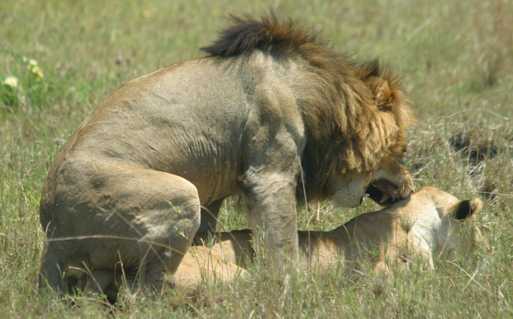
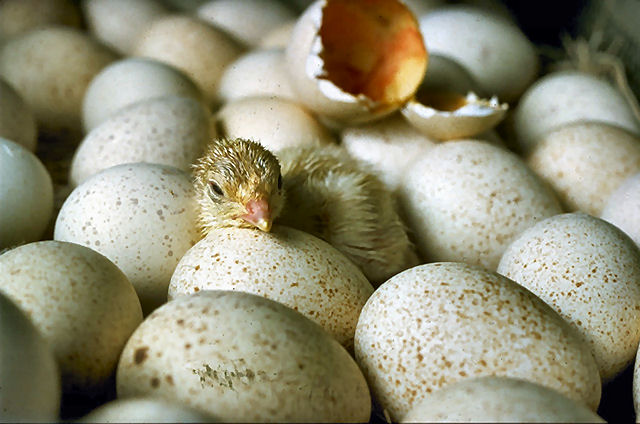
You and me baby ain't nothing but mammals

It isn't often that a discussion about a featured picture candidate carries much significance beyond technical and encyclopedic merits. Systemic bias gets mentioned sometimes, but usually as a passing concern. Today was different. I won't show the image itself but I'll link to the discussion. The candidacy is called Moment of Birth and there's an ongoing discussion about whether it constitutes gender bias, privacy invasion, or a human rights violation.

It's a photograph of a caesarian delivery from a hospital in London without documented permission from the subject.

From a certain distance, heated Wikipedia debates can look hilarious. Immediately after I posted my second comment to the thread I actually messaged two people to ask whether it went too far.
Let's call this a matter of perspective. I am a woman. If anyone ever shows up in a delivery room where I am giving birth and attempts to use "she's lying down" as a pretext to take photographs without my permission, I will leap from the gurney, tackle the SOB, and eat the camera.

Two conversations later I haven't altered that post. Some women welcome photography in the delivery room; some even allow such images to be used in television and other mass media. That is a very generous choice from the people who make it. When I choose to do something generous in a medical setting I give blood. I've given a lot of blood. Nobody makes the mistake of supposing my decision to give blood gives them a right to stick a needle in your elbow and take your blood. You'd get angry if they tried that without your consent, wouldn't you?

So the image is under consideration for featured picture status, which means it would spend a day on Wikipedia's main page. To give a sense of what could result, so far this month Wikipedia's main page daily traffic had a low of 12.7 million page views on June 7 and a high of 20.1 million page views on June 23. That's a lot of eyes. We don't know whether she ever consented to have the picture taken, or uploaded to Wikipedia, and she almost certainly doesn't know that it's a candidate for featured picture: the editor who uploaded the image has been inactive since February.

Babies are cute; most people want to show them and see them. And childbirth itself is fascinating and encyclopedic. But wait--it's also a medical procedure--and one of the most personal moments in the world. A good number of people would no sooner show the world a photograph of their own child being born than a photograph of their own child being conceived.

Until I raised the consent issue nobody even mentioned it; I appear to be the only woman in the discussion. Fortunately once I voiced this concern some other editors joined the opinion. It's not unanimous though. The ongoing debate covers subject identifiability, latent gender bias, and the European Convention on Human Rights.

----
Image credits:
http://upload.wikimedia.org/wikipedia/commons/d/d2/Lion_sex.jpg
http://upload.wikimedia.org/wikipedia/commons/f/f0/Chicks_hatching_USDA95c1973.jpg
http://upload.wikimedia.org/wikipedia/commons/f/f2/Birth_of_black_bee_(Apis_mellifera_mellifera)-small.jpg
http://upload.wikimedia.org/wikipedia/commons/d/d2/Eucharius_R%C3%B6%C3%9Flin_Rosgarten_Childbirth.jpg
http://upload.wikimedia.org/wikipedia/commons/e/e6/Expirimental.jpg

Think twink

Truth is stranger than fiction. I tried to dream up Biggest Bubblebutt in the Department as an example of an award that was too over the top to seriously exist. Reality outdid me. Here's the actual caption for a young man's portrait in a Wikipedia article.

"Young and smooth" pornstar Brent Corrigan was nomimated as "Best Twink Performer" for his work in Fuck Me Raw which was also nominated for a 2008 Golden Dickie "Best Twink Movie".

Well...how else would you illustrate an article called Twink (gay slang)? In case you wonder why such an article exists at all, deletion has been tried. I don't make these decisions. Wikipedia is not censored so I coexist with this type of article, usually ignoring it until a dispute arises when I alternate between facepalms and wry laughter as I aim to apply the same policies and standards that work everywhere else.

Yeah, the caption is relevant to the image and the article. It's an outdoor photograph of a celebrity, properly licensed, that's pertinent to the subject. Could be more illustrative if we had a replacement that showed more of the fellow's body.

There used to be a different image. The alternate version is a redlink now because I deleted it from Commons. I'll explain why in a bit. But first it's worth noting that that a minor edit war and a noticeboard thread took place, along with a userblock that was not taken very well by its recipient. People get worked up about these things. I won't link to the page where this was posted, but here's a copy/paste of the text.

This is the most ridiculous thing I have ever seen on Wikipedia. A month block for restoring a free image to an article that had been there for months. What about all the other images of people on Wikipedia that are being used. Autofellatio is a good example. What about the guy in the article sucking his own cock?? Or Bear (gay slang) which features free pictures of people. I mean seriously, this is total bullshit. The only thing I'm guilty of is not knowing that a free image of someone can't be used in an article per BLP and that sure as fuck doesn't warrant a month block. You just came along and removed the image from the article, citing BLP but not explaining on the talk page or in the summary why it was a BLP violation.. so for people who don't know that a free image can be a BLP violation, how the hell are we supposed to know if you don't give a reason why. All you said on the talk page was BLP APPLIES but BLP doesn't say SHIT about images anywhere. This is a mountainous pile of bullshit because fuck, Wikipedia:Biographies of living persons doesn't have the word image in it anywhere. Total total total bullshit. And Gwernol called it vandalism?? WHEN the fucking image has been in the article for MONTHS????? Did I mention this was total bullshit??

The noticeboard discussion itself concluded that the block was too long and went into considerable depth about whether twink is a pejorative term. I had nothing to do with that conversation; somebody pointed it out to me today. The image had already been replaced at that article before I came along. I deleted it outright because, in my opinion, urgent deletion was necessary.

There's a priority of questions that need to be addressed when evaluating these matters. When the subject itself is a hot button issue people often lose sight of which questions take precedence.

1. What's the license? The shot itself was under free license and had been bot-uploaded from Flickr. That part was proper.

2. Are there personality rights and permissions issues with the image? Yes there were. This was an indoor photograph and the young man's face was recognizable, yet the upload lacked model permission. This renders it unacceptable per Commons hosting policy. I prioritized the deletion because the subject also was holding a cocktail in his hand and may have been underage.

So a significant part of the noticeboard discussion was irrelevant. The question of whether twink is pejorative really doesn't come into play until after the basic license and permissions issues have been satisfactorily addressed. With the earlier image they hadn't been, and the replacement image avoids that dilemma by selecting a public figure whose notability is a direct result of his twinkitude. So although the previous image was shirtless and somewhat more illustrative of twinkdom, there can be no question that the present model consented to become an emblem of twink pride.

This does leave me wondering about the permissions for the autofellatio photograph. It was taken indoors and I see no confirmation of model permission. Apparently it was previously deleted and restored. Although I've got lingering questions about its propriety (regarding model permission and policy compliance, not subject matter), the model appears to have reached legal majority and no alcoholic beverage appears in the shot. So I won't give it rushed handling the way I did with the previous twink illustration.

Now excuse me while I lean back and shake my head, muttering heaven help us for covering this stuff, and get on with other work.

Monday, June 23, 2008

Professor Gametheory

Somey makes an interesting comment regarding my last post:
The secret to winning Wikipedia: The Game is to convince others (especially admins) that someone who disagrees with you, but is otherwise relatively harmless, is actually either a spammer or hater.

These things have little to do with someone's "failure to understand the rules." They have everything to do with politics, personal alliances, refusal to compromise, wearing down opponents with ceaseless bickering, and so on.

He's articulate and his longstanding commitment to Wikipedia Review demonstrates sincerity. And although I don't like this, I've seen it play out. Not entirely in the way he describes, but sometimes.

The most common shape it takes is frivolous noticeboard threads. When I was an administrator I estimated something like 30% of the requests for administrative attention that came from accounts I didn't already recognize were initiated as political moves by the primary aggressor in a dispute.

People come to Wikipedia for a lot of reasons. I've known doctoral candidates who worked on articles as a study technique for their boards and dissertations. It's easy to see when those people are for real. We're lucky when we have them and I do my best to make the site a collegial place for them. On rare occasions I've also endorsed sitebans for people who have doctoral degrees. And no, I'm not thinking of a Wikipedia Review contributor with that description. Long before that, there was a mathematician from the Southern United States whose principal activity was to create and recreate a biography of himself. After enough iterations and enough failed attempts to communicate, we gave up. I'll call him Professor Gametheory.

There are some people that, if they don't know, you can't tell them. - Louis Armstrong

Was he harmless? Maybe some would say so. But the article didn't meet Wikipedia's notability guidelines. Facebook and MySpace are better suited to an assistant professor's purposes; open edit is a problematic format for low traffic biographies of living subjects. Those of us who volunteer for Wikipedia notice a pattern after a while: a large number of garage bands, mom-and-pop businesses, and ordinary people view a Wikipedia article as a status symbol and want a page about themselves.

Some of them reeaaaally want it.

And those diligent individuals set about creating the article they want, and canvassing the deletion discussion with family and friends, then recreating the article, and creating it again under a different account, then creating it under a slightly different name, and the cycle continues until one of three things happens.

1. Professor Gametheory's colleage Doc Sensible listens to one of us friendly volunteers when we explain about referencing. Hey Doc, did you get written up in the newspaper? Kept the clipping? Cool, that'll help. Got a couple more articles in your scrapbook...? (Caveat: after the tenth go-around the volunteer may sound more exhausted than friendly.)

2. Would-be rock stars realize that they are really truly not going to keep a Wikipedia article before the garage band gets signed. Land the label first. Wikipedia won't book your concerts.

3. A bunch of volunteers riding Professor Gametheory's delete-go-round for the fifteenth or twentieth time all shout in unison stop this ride! I don't get paid for this hassle! A ban ensues and the dizzy volunteers stumble back to solid land, wondering how an interest in day lilies ever led to this.

This is where Wikipedia's theater of the absurd begins. Because as Somey knows from long experience on Wikipedia Review, actually having a Wikipedia article about oneself isn't necessarily all milk and honey.

So Professor Gametheory gets sitebanned without an article and is hopping mad about it. Doc Sensible rummages through old boxes all weekend and salvages just enough newspaper clippings and dusty awards to become notable. Doc gets her article and is happy for a little while. Then she discovers that someone else other than herself and her Mom might edit the page. Someone who doesn't like her. Someone who's gunning for the same tenure position. Someone like that shady dude down the hall: Professor Gametheory.

Professor Gametheory is socking and Doc Sensible is no longer happy.

Um, but wait. The page doesn't just automatically come down because Doc doesn't want it anymore. She is, after all, notable: she earned the East Georgia Academic Distinction of Biggest Bubblebutt in the Department (I pasted this from her biography just now--could that have been vandalized)? The volunteers who had been on this all got sick of the silliness and are running a featured article drive for the day lilies page. That's nice for day lily enthusiasts, awful for her, but what are you going to do? Dock a volunteer's pay?

There is a better solution: blame the administrator.

As of this writing, English Wikipedia has 1563 administrators to oversee 2,419,730 articles. (Check here for the latest numbers). On average that's 1 administrator for every 1548 articles--in theory. In practice about a third of the admins are AWOL on any given month because these chumps are volunteers. Or to put it another way, that's one administrator for every 4695 registered accounts. That's quite a chunk even if half of those regular accounts are operated by the same twelve people.

Doc Sensible wants to get rid of that article. She locates the list of administrators and e-mails one of the names under a.

User:Adminitis sounds like a responsible name.

Adminitis is expected to respond within twelve hours, having memorized the entire Doc Sensible biography and edit history. He returns a few lines a day later, having skimmed the introduction.

Strike one.

He does not delete the article instantly upon demand.

Strike two.

He mentions that Wikipedia has policies. And provides links to the pages where Doc Sensible might solve the issue herself. More e-mails from Doc Sensible follow, with the underlying expectation that Adminitis has nothing better to do than read whole talk pages in search of five words she happens to paraphrase. He asks for page diffs. Then, after Adminitis reads the original deletion discussion, he commits the fatal error: he mentions that Doc Sensible seemed to want this article two months ago.

Strike three. Adminitis is wicked and corrupt.

Doc Sensible, fretting over upcoming tenure review, posts a long and unprofessorial rant on Adminitis's user talk.

Meanwhile Professor Gametheory, who has been certain from the beginning that Wikipedia is indeed corrupt, creates a spoofing sock account via Tor node called Doc Insensible to leave obscene vandalism on Adminitis's user page.

Doc Insensible gets indeffed while Doc Sensible gets blamed and lands a 48 hour block for socking and personal attacks. Adminintis puts a "Wikibreak" sign on his user page and stops answering messages. Oblivious to each other's actual identities, both Professor Gametheory and Doc Sensible head to the same critical forum to lick their wiki-wounds.

They wonder who this Adminitis is? Why is he granted such power? Is he even an adult? Soon a plan is hatched to track the administrator like any other endangered species: by shooting his rumpus with a tranquilizer gun and stapling a radio tag to his ear. All good wikicritics everywhere must uncover Adminitis's whereabouts for the good of humanity.

Back at the university, at the end of the final exam a quiet sophomore pulls out a Blackberry. After the lecture hall has emptied he places a blue book directly in Professor Gametheory's hands. It contains only three lines of text.

Hi, we know each other better than you realize. Call me Adminitis. Let's talk about your tenure and my grade. G-mail chat, off the record.

----
Image credits:
http://upload.wikimedia.org/wikipedia/commons/d/d9/Opening_chess_position_from_black_side.jpg
http://upload.wikimedia.org/wikipedia/commons/4/4e/Kettenkarussell_Wuppertal_2005.jpg
http://upload.wikimedia.org/wikipedia/commons/8/86/TragicComicMasksHadriansVillamosaic.jpg