Friday, May 30, 2008

Mantanmoreland: lessons learned

Yesterday one of Wikipedia's oldest and highest profile disputes led to the siteban of an account called Mantanmoreland. Without going into too many details about the dispute itself, here's an idea of its scope: it goes back as far as early 2006 on Wikipedia and is older than that elsewhere. Patrick Byrne, the CEO of Overstock.com, is directly involved. So is Judd Bagley, who until recently was an Overstock.com employee. Both of them have disclosed their real names and their conflict of interest. On the other side of the fence is Mantanmoreland, who hasn't disclosed his identity but is accused of being a financial journalist named Gary Weiss. The underlying dispute is about a financial practice called naked short selling.

It was I who proposed Manatanmoreland's siteban at the discussion that actually achieved it. Collectively, we Wikipedians weren't good at all at managing this dispute. Not a single person comes out looking wise and good throughout all of this (myself included), so rather than apportion blame and try to label good guys and bad guys this post looks at some things we can learn from this so that the site runs more smoothly in the future.

1. Communicate Wikipedia site standards proactively

Most of the world doesn't understand how Wikipedia really works, and most of the people who do understand how it works are publishing their understanding on Wikipedia in userspace essays and the like, where even the most brilliant essay reaches an audience of seasoned Wikipedians. The average person out there in the general public doesn't know how to find that wisdom and doesn't know which Wikipedian is knowledgeable and trustworthy. So they turn to the same sources Wikipedians refer to in content discussions as reliable sources, and that isn't all that effective a plan because the magazine stories and editorials are mostly getting written by journalists who have a flawed understanding and make a few honest mistakes, or by disgruntled people who can't publish on Wikipedia anymore. Misunderstandings are inevitable as long as that status quo continues.

2. Establish a clear path back to good standing for indefinitely blocked and banned editors.
Wikipedia has a blocking policy and a banning policy, but no corresponding unblocking/unbanning policy. Yes, we assume good faith and often give second chances, but on an ad hoc basis that's opaque to anyone who doesn't have long experience with the site. One of the things that would cut down on drama and sockpuppetry is if we articulated a clear path back to good standing for the average banned or indefinitely blocked editor. It would be good for the site if we worked out consensus standards to address the usual situations, so that people who get shown the door know the honest ways back in and so that our own decisions about bringing people back become more consistent and equitable.

3. Craft remedies within the realistic limits of volunteer resources
Sometimes the mantra remedies are preventative, not punitive has to weigh broader implications than the particular case at hand. For example, most experienced editors are capable of creating vote stacking sockpuppets. The reason they don't is because, historically, this site has taken vote stacking very seriously and treats deliberate vote stacking as grounds for a siteban: as long as one's entire reputation is at stake, few consider it worth the risk. And that's a good thing because a crafty sockpuppeteer is hard to catch and consumes a lot of volunteer labor. We don't have the resources to track them down in droves if that problem ever gets out of hand, which is why a short two week block would have been exactly the wrong message to send to the community when someone who has already vote stacked a request for administratorship and the arbitration committee elections gets gets definitively caught sockpuppeteering yet again. The editor community must not perceive a two week block as the worst case scenario for vote stacking, because to some people that will look like a worthwhile risk. Nothing less than the integrity of the site is at stake. In a conversation yesterday someone supposed that amounts to coming down particularly hard on high profile cases. Not at all: we should be sitebanning all vote stacking sockpuppeteers unless they have an exceedingly good reason why a lone instance was accidental and will never happen again.

4. Establish fair parameters for conducting community sanctions discussions.
There are several ways we can improve this, but for now I'll repeat the points I raised with the administrator who closed the Mantanmoreland ban discussion:
  • When an editor needs to be shown the door, they leave with less discontent if they know they've had a voice in the process.
  • When an editor abuses the opportunity of defending themselves, their own bad behavior is easy to block/revert/delete and the example makes the community's decision simpler.
  • Sometimes consensus does change as new information comes to light.
  • Since political animals exploit any exploitable precedent, giving a fair term for rebuttal in every case makes it harder for wikipoliticians to railroad a good editor off the site.

----

As a final observation, one of the more salient concerns raised by critics of Wikipedia in relation to this dispute is the tension between the Wikimedia Foundation's privacy policy and Wikipedia's conflict of interest guideline. Supporters of Byrne and Bagley argue that they got penalized for disclosing their conflict of interest, while--if one believes the allegations that Mantanmoreland was operated by Gary Weiss--there was a tangible benefit to not disclosing a conflict of interest. To set the dilemma in generalized terms, my answer is simple: people who exploit the privacy policy in order to circumvent the conflict of interest guideline do so at their own risk. Wikipedia's transparency is astonishing and nearly unprecedented: most of what happens here is public information available to anyone on the planet who has an Internet connection, and people who come there with an actual conflict of interest should bear in mind that deception can play out much worse than candor in the long run.

Thursday, May 29, 2008

Arbitration Committee performance review, Part 1

This is the first of a series of blog posts to discuss Wikipedia's Arbitration Committee. If you're not already familiar with what that is, it's sort of Wikipedia's supreme court. Wikipedians call it ArbCom. It's not a fun place--it's where you go to solve problems that haven't gotten fixed anywhere else.

A little background: in Wikipedia's earliest years Jimbo Wales was the only person who could ban anyone from the site. He was the final stop in dispute resolution. By 2003 that was getting too cumbersome for one person to do alone, so new solutions got brainstormed. ArbCom went into operation in April 2004. It's a panel of 15 people who are sort-of-elected by the community, but ultimately selected by Jimbo (the process is complex). Jimbo reserves the right to dissolve ArbCom, but it's largely a theoretical right and has never been implemented. Sometimes arbitrators resign before their term ends. So when a vacancy occurs Jimbo appoints a replacement. Usually he chooses from the pool of also-ran candidates from the last election, but not always. The most (in)famous instance of that was the short-lived tenure of Essjay.

A growing number of experienced editors within Wikipedia have expressed concerns about ArbCom lately. Complaints per se are nothing new--nearly everyone who gets sanctioned thinks their own case was handled badly--and because of this discussions about arbitration problems generally get bogged down in the intricacies of this or that particular case.

It is my opinion that the Arbitration Committee was never a very scalable concept, and that its responsibilities have expanded past the point of diminishing returns. In order to present this in an impartial manner I'll focus on trends, and present tangible numbers. Wikipedia's arbitration committee has never had a performance review before. Considering the important role they serve in what has become the world's seventh most popular website, it's time that they do.

First, a review of Wikipedia's growth:
Apr 2004: 250,000 articles
Mar 2005: 500,000 articles
Mar 2006: 1,000,000 articles
Sep 2007: 2,000,000 articles
May 2008: 2,391,955 articles (as of this writing)


Following is my research on the arbitration committee's caseload. The research method is simple: I counted the number of open cases on the last day of each month since ArbCom began. Each example is linked to the source where I gathered the data. Requested cases and recently closed cases are not included toward these figures. Cases in formal review do count. Please report any errors so that I can correct them promptly.

My finding is a significant and sustained dropoff in recent monthly cases, reaching its nadir during the three most recent months (March-May 2008) when the Arbitration Committee has heard the least number of cases ever, including its first three months of existence from 2004 when the Committee had no preexisting cases in its docket.

2004
Apr: 4 cases
May: 6 cases
Jun: 6 cases
Jul: 9 cases
Aug: 12 cases
Sep: 12 cases
Oct: 14 cases
Nov: 13 cases
Dec: 13 cases

2005
Jan: 6 cases
Feb: 7 cases
Mar: 12 cases
Apr: 4 cases
May: 12 cases
Jun: 12 cases
Jul: 15 cases
Aug: 13 cases
Sep: 15 cases
Oct: 18 cases
Nov: 16 cases
Dec: 20 cases

2006
Jan: 26 cases
Feb: 14 cases
Mar: 12 cases
Apr: 12 cases
May: 11 cases
Jun: 14 cases
Jul: 19 cases
Aug: 18 cases
Sep: 12 cases
Oct: 11 cases
Nov: 11 cases
Dec: 13 cases

2007
Jan: 11 cases
Feb: 12 cases
Mar: 7 cases
Apr: 12 cases
May: 12 cases
Jun: 13 cases
Jul: 12 cases
Aug: 12 cases
Sep: 12 cases
Oct: 7 cases
Nov: 7 cases
Dec: 4 cases

2008
Jan: 7 cases
Feb: 6 cases
Mar: 5 cases
Apr: 4 cases
29 May: 4 cases

Several interpretations are possible based upon the data presented thus far. The introduction of community banning in mid-2005 and the 2007 expansion of community sanctions to include lesser remedies such as topic banning and revert parole is one factor worthy of consideration. In my opinion that does not fully explain the dynamic observed. Blog format is better suited to short presentations than long ones, and more relevant data will follow in future posts.

----
Image credits:

http://upload.wikimedia.org/wikipedia/en/7/7c/Wikipedia_Article_Creation.png

Wednesday, May 28, 2008

The elusive geek goddess

This is not going to be my most politically correct post. So if you're easily offended you might skip this.
----

I was chatting with a male Wikipedian the other day. He had been dating a young lady who wasn't much interested in Wikipedia. She preferred music.

This was a problem.

There's nothing wrong with music, actually. And the lady herself is a fine human being. What he wants, though, is a geek goddess: gorgeous, and into the open source movement. Fascinating, plus able to code a brilliant bot. And it's not like that ought to be such an unrealistic goal for a fellow who's young, good-looking, affable, and educated.

So I told him my theory. And so help me, I'll tell you too: geekdom is basically a talent that develops when people can't get a date.

Just think how many marketable computer skills get self-taught by young males as they search for pornography.

Now when an actual female shows up in the world of geekdom, a bunch of guys gravitate to her. Years before I joined Wikipedia I participated in another online community (gasp...a MUD...yes I'm really a geek). And I ran a fansite for the game and the top two questions on my FAQ read as follows:

1. Are you female?
Yes.

2. I mean really, are you female?
Yes.

I survived that barrage because my own geek roots run unusually deep (named after a physicist, etc.), but normally a woman in this situation ends up spending her evenings at dinner and the movies and never achieves her full geek potential. Exceptions exist, of course. Hence the stereotypical female geek--the one who's been looked over by 400 pimply faced pornmonsters who each decided that even a pimply faced pornmonster has his standards.

Maybe that's not kind to women. But heck, it ain't kind to men either.

So what's a guy to do? Especially one like my buddy who's a pretty good catch himself (he even has clear skin) but just wants a woman whose interests are something like his own? He could soar across cyberspace like a hawk looking for attractive single female geeks, but it's crowded up there because he's riding the same thermals as thousands of other hawks, and his potential beloved is going to get snapped up as quickly as a white mouse on an asphalt sidewalk next door to the aviary.

"Look for a wannabe geek and teach her Dreamweaver," I suggested. "Or just listen to more music and read the movie listings. The one you're already with sounds like a sweet girl."

----
Image credit:

http://upload.wikimedia.org/wikipedia/commons/0/03/The_Goddess_as_Mother_Nature_2.PNG
http://upload.wikimedia.org/wikipedia/commons/f/fe/Benq_joybook_transparent.png
http://upload.wikimedia.org/wikipedia/commons/7/7d/Geek_rubber_duck.jpg

Sunday, May 25, 2008

The official Soviet red herring

Maybe it hasn't been totally clear why I tread lightly in political disputes. It started in the fall of 2006 when an editor (apparently a Cuban expatriate) insisted that that I was a Russian Communist. When I blocked him for using the talk page of the Fidel Castro article as a blog he dismissed my assurance that the blog was based in policy: no, a Russian username transformed me into a supporter of Fidel Castro. He even supposed the time stamps of my edits suggested I was in Eastern Europe. (Gee, and I thought I was here in San Diego).

Never mind that I did cite valid policy. And never mind that I chose the username to honor the first female officer of the Russian Army who retired more than a century before the Communist revolution began, and that it's darned hard to find any Communists in Russia these days. I can claim to be anything on the Internet; I happen to have claimed consistently for years that I hold a degree in history from Columbia University and that I'm a female war veteran, and that the username might have something to do with a touch of mild feminism, but I'm not Russian in the slightest.

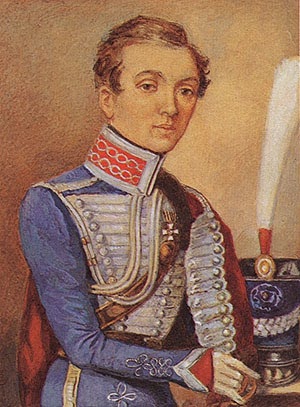
Really, I've never set foot in Russia. I speak maybe six words of Russian. I've never dated a Russian. I'm not Russian by descent. Nadezhda Durova published her service journal after she met Pushkin, and I think that's pretty cool. There ain't much more to be said there.

But sometimes editors are so darned certain...

One of the other more memorable occasions happened in summer 2007 when a Serb editor and a Croat editor brought a dispute to an administrative noticeboard. I looked at their arguments and their evidence and looked at the policies, and I decided the Serb was right. And then of course the Croat was furious.

You see, Russia is a historic ally of Serbia. Certainly that must have been why I agreed with the Serb. Never mind the policy I'd quoted.

This is all a great cover for my FBI work, or vice versa.

So in honor of moments like that I'm going to award the Official Soviet Red Herring to the best story I receive. I want your memoirs--the silliest incidents where an edit warrior has mistaken your politics or ideology just because you cited a policy that went against that person's wishes. The best account will win that cute Communist herring above--get yours straight from the apparat-chick herself in the Soviet Socialist Republic of California. Diffs earn bonus points, but I'll consider all fish tales if they're funny enough and you swear on Mao's Little Red Book that you're completely true.

Please post your red herring candidates in the comments section below.

Potential superpowers

Not the greatest idea for an article, if you ask me. Potential superpowers--what doesn't have potential? Let's see:

*Macedonia may not look like much today, but it didn't look like much before Alexander the Great either.
*Mongolia: same deal; see Genghis Khan.
*Corsica: not even an independent country, but who cares? Napoleon had bigger ambitions.

Actually the editorial disagreements at that page have more to do with countries that are kind of important such as Brazil. Today the discussion is about Russia. I noticed when a certain edit showed up on my watchlist. An IP editor made the edit note Removed slanderous, hateful comment.

That piqued my curiosity. When I read the talk page itself I noticed several signs of a discussion that was headed downhill. Actually the IP had removed the following:
Russia as a developing country...that's funny. I've lived in the US, and it's not more free or prosperous than Russia. I'd have to say, Russia is more of a role model than the US. India may look up to the US, but China hardly does. Nobody likes the US anymore, because of it's imperialistic, nationalistic, war-mongering, and ruthless foreign policy. Russia has better human rights than America, last I checked, America still has the death penalty, Russia has abolished it in practice. While the Russian people are subjected to the daily doses of propaganda we get over here, Americans get it too. The American media and education institutions are all about teaching kids how great America and how evil countries like Russia, China, and Cuba are. They're not. I've been to all three. If that's not propaganda, I don't know what is. Again, Russian propaganda may say it's a superpower, but it's not. Both countries have propaganda and human rights issues, so let's not try to put one over the other, that's just scaremongering and propaganda. [[User: Saruman20]] ([[User talk: Saruman20|talk]]) 12:53, 25 May 2008 (UTC)
Here's one of the challenges that goes hand in hand with an open edit encyclopedia: Wikipedia isn't a discussion forum or a blog--and that post drifts toward that territory. I don't necessarily like what this person is saying, but that's beside the point: when I log into Wikipedia I take it upon myself to log out of politics. Blanking another editor's comment is a serious matter onsite, and only acceptable under specific circumstances.

Although both the post and the thread are problematic for other reasons, I don't specifically see slander or hate speech in that post. So I restored the post with this comment:
No slander in the statement; please discuss rather than remove. If an editor is misusing the talk page as a blog or soapbox then please raise the issue at a noticeboard.
National pride and politics are hot button topics to a lot of people. What experience on Wikipedia has taught me is that, in this type of situation, it can make all the difference if an uninvolved editor steps in and offers a better solution than what the page's participants have been pursuing. The key is to step in early with some mild and friendly solutions before things get too heated.

So I started a follow-up thread.
Please keep the discussion focused on editorial issues that relate directly to this article. If the editors here have difficulty reaching consensus, suggest [[WP:DR|dispute resolution]]. Best wishes.
If past experience is any indication of future performance, this will go one of two ways. Either the editors are reasonable and they'll follow the suggestion to try dispute resolution, or one of them will pick out my Russian username and accuse me of hating the United States.

We'll see how this goes.